

TwinPare Research Β· Sleep Series

Sleep, Genetics & Twins

What twin research reveals about sleep, genetics, chronotype, body weight and infant sleep β€” and how population-level findings can be explored carefully through personal patterns.
This English-first TwinPare Research series is general education. It does not diagnose sleep disorders, prescribe sleep routines, or replace medical advice.
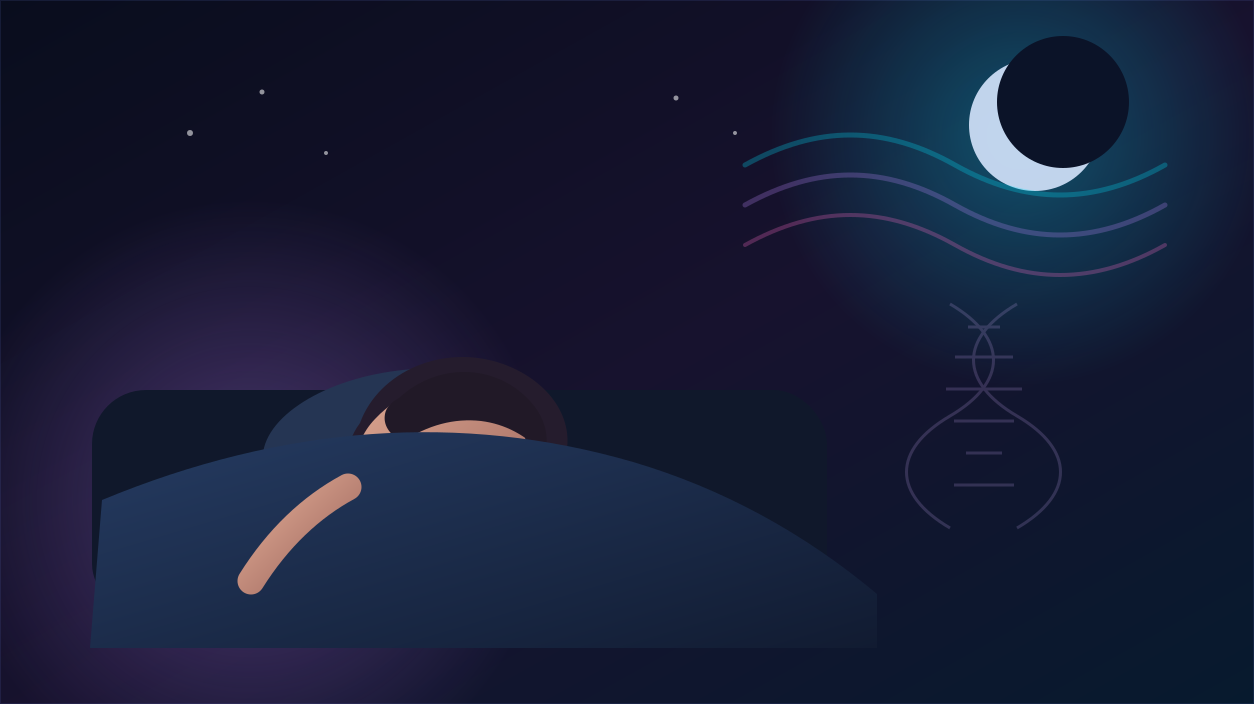
An adult woman sleeping peacefully in a dark night setting with a moon, soft sleep waves and restrained research motifs.
Seven-article Sleep Series

Why sleep is a strong TwinPare Research topic

Sleep is one of the places where twin research is especially useful. Identical and fraternal twin studies help separate inherited tendencies from shared family conditions and individual life patterns β€” while also reminding us that research estimates describe groups, not a single person’s destiny.

This series connects seven primary research questions: why twins can sleep differently, what happens during sleep loss, whether habitual sleep duration relates to gene expression, why some people feel earlier or later, how sleep and body weight are linked, how the brain recovers when sleep finally returns, and what infant twin studies reveal about early settling and waking.

TwinPare Research Β· Sleep Series

All 7 Sleep Research articles

Identical twin adults shown in separate nighttime sleep settings, illustrating different sleep patterns.
Article 1 of 7Β·9 min read

Same DNA, Different Sleep: How Much of Your Sleep Is Actually Genetic?

Twin research suggests that sleep is partly heritable β€” but genes are only part of the story.

Read article

Identical twins participating in a sleep deprivation research setting with a scientific laboratory atmosphere.
Article 2 of 7Β·8 min read

38 Hours Without Sleep: Why Some Brains Handle Sleep Loss Better Than Others

A twin sleep-deprivation experiment suggests that vulnerability to attention lapses varies strongly between people.

Read article

Identical twins in separate sleep settings with a scientific and genetic research context.
Article 3 of 7Β·8 min read

Same Genes, One Hour Less Sleep: What Changed Inside the Body?

A small identical-twin study explored whether habitual sleep differences were reflected in blood gene-expression patterns.

Read article

A split visual showing early morning light on one side and late-night wakefulness on the other, illustrating different sleep timing patterns.
Article 4 of 7Β·8 min read

Born a Morning Person or a Night Owl? What Twin Research Says About Sleep Timing

Twin research suggests sleep timing reflects both biology and environment, especially across adolescence.

Read article
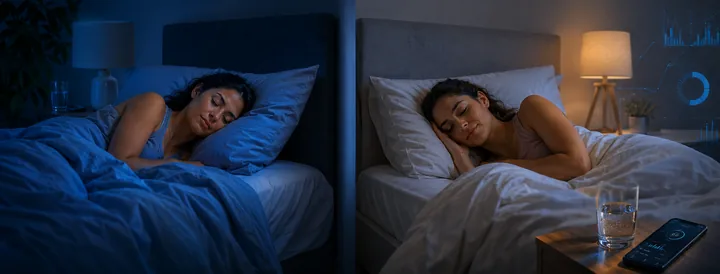
Identical twins in separate health and sleep-related settings, illustrating the relationship between sleep and body weight research.
Article 5 of 7Β·8 min read

Sleep and Body Weight: What Happens When Genetically Similar People Sleep Differently?

A twin study found an association between shorter sleep and BMI, but not a simple genetic or weight-loss story.

Read article
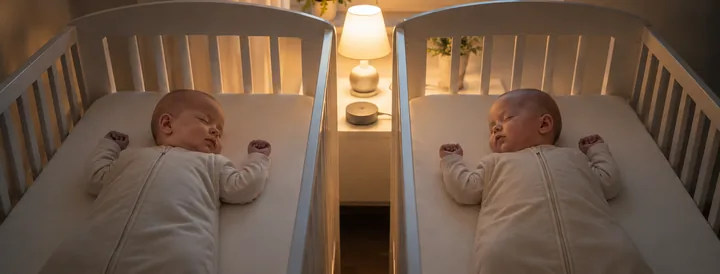
Twin infants sleeping on their backs in separate clear cribs in a calm nighttime setting, illustrating research into infant sleep and night waking.
Article 6 of 7Β·8 min read

Why Does the Baby Keep Waking Up? A Swedish Twin Study Offers a Surprising Clue

A Swedish twin study suggests infant sleep and settling reflect changing genetic and environmental influences.

Read article

Same-sex adult twins sleeping in adjacent laboratory beds while their recovery sleep is monitored with EEG after an extended period awake.
Article 7 of 7Β·14 min read

Can You Catch Up on Lost Sleep? What a 38-Hour Twin Experiment Revealed

After 38 hours awake, twin brains entered deeper recovery sleep β€” but recovery was not a simple hour-for-hour repayment.

Read article