
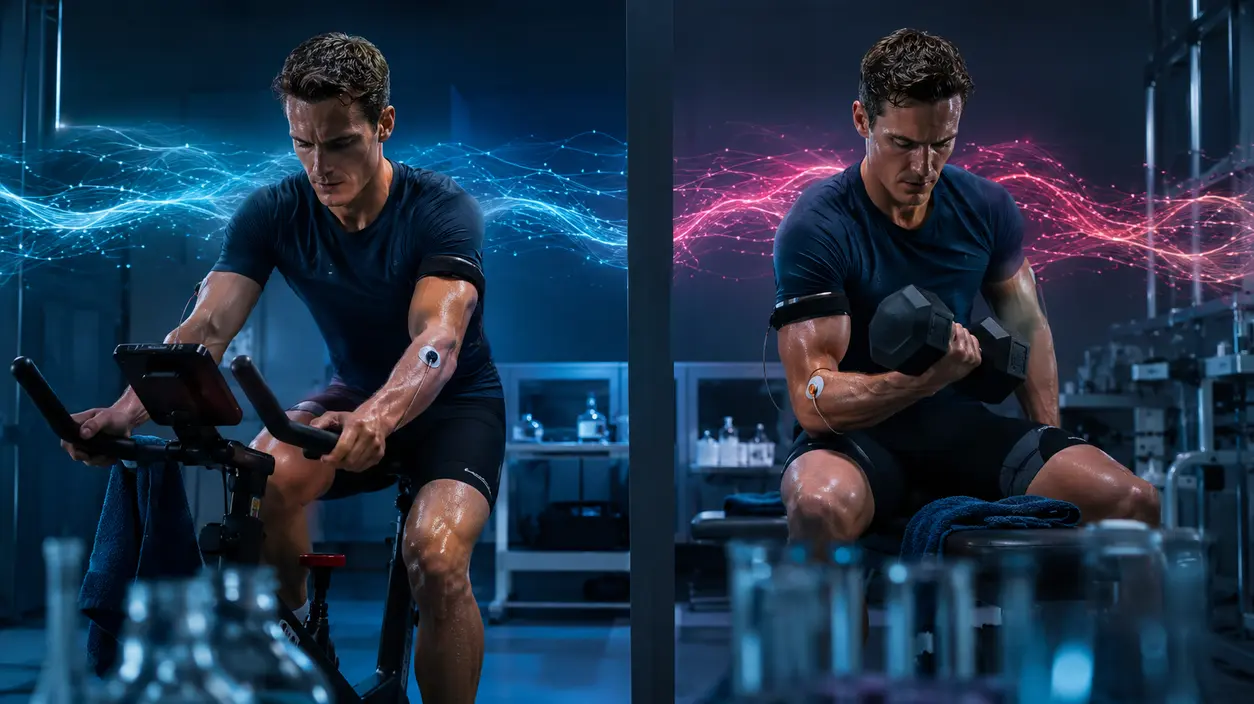
What identical twin brothers reveal about growth hormone, prolactin, cortisol and testosterone
Quick answer
What does the research show in brief?
increases in growth hormone and prolactin showed significant resemblance within pairs.
Key takeaways
- In nine pairs of trained male identical twins, the exercise-related
- The same study did not find equivalent within-pair resemblance for
- Another twin experiment found no detectable genetic influence on the
- In seven pairs of young identical twin men, testosterone and DHEA-S
- Acute hormone elevations after a workout are not reliable consumer
What identical twin brothers reveal about growth hormone, prolactin, cortisol and testosterone
By TwinPare Research | Evidence review: 20 August 2026 | Estimated reading time: 9-11 minutes
Standfirst. Two people can run at the same intensity, follow the same programme and finish equally exhausted - yet their hormone curves may not look the same. A handful of unusually direct twin studies suggest that genes may shape parts of the endocrine response to exercise. They also show why the popular story that a bigger post-workout hormone spike means better gains is much too simple.
The unusually direct twin experiment
Most exercise studies compare unrelated participants. That makes interpretation difficult: differences in age, training history, body composition, sleep, diet and genetics all arrive at the laboratory together.
Di Luigi and colleagues took a more focused approach. They recruited nine pairs of trained male monozygotic twins. Each participant completed 30 minutes of treadmill running at his individually determined anaerobic threshold. Blood was collected repeatedly before the exercise and during 90 minutes of recovery. The researchers measured ACTH, beta-endorphin, cortisol, growth hormone and prolactin.\[1\]
This was a tiny study by modern standards, but its design was unusually relevant to the TwinPare question: when genetically identical men face a closely standardized physical stressor, do their hormone responses resemble those of their co-twins?
What the researchers found
TWIN RESEARCH SHOWS
Exercise-related stress increased all the measured hormones either before the run, after it or across both periods. The anticipatory rise matters: the endocrine response can begin before the first proper stride, because expectation, arousal and preparation are also biological events.
The most notable finding was significant within-pair resemblance for the exercise-related rise in growth hormone (GH) and prolactin. The percentage change in cortisol also showed resemblance within pairs.
But the pattern was not universal. The researchers did not find significant within-pair resemblance for the exercise-related increases in ACTH, absolute cortisol concentrations or absolute beta-endorphin concentrations.
That distinction is the heart of the study.
It would be easy to reduce the result to "hormone response is genetic." The data do not support that sentence. A more accurate interpretation is:
In these trained male twin pairs, some features of the GH and prolactin response looked more alike within genetically identical pairs, while other pituitary and adrenal responses did not show the same pattern.
The body does not have one exercise-response dial. It has several interacting systems, and their inherited and environmental contributions may differ.
What do these hormones actually do?
Growth hormone participates in fuel mobilization, tissue regulation and the GH/IGF-1 axis. Exercise can produce a temporary GH rise, particularly when the session creates substantial metabolic stress. That rise should not be translated automatically into new muscle tissue.
Prolactin is best known for its role in lactation, but it also responds to physical and psychological stress. In exercise research it can act as one signal that the body has registered a demanding event. A post-workout rise is not a performance score.
ACTH and cortisol belong to the hypothalamic-pituitary-adrenal stress system. ACTH signals the adrenal glands; cortisol helps regulate fuel availability and the response to stress. Cortisol is not simply a "bad" or "muscle-destroying" hormone. Its meaning depends on timing, dose, context and the pattern across the day.
Beta-endorphin is involved in pain modulation and stress responses. It may change during strenuous exercise, but a blood concentration cannot summarize motivation, pain tolerance or the famous "runner's high" by itself.
Cortisol delivers an important counterexample
Kirschbaum and colleagues studied cortisol responses in monozygotic and dizygotic twins exposed to three different challenges: exhaustive bicycle ergometry, psychological stress and an injection of synthetic corticotropin-releasing hormone.\[2\]
Thirteen monozygotic and eleven dizygotic pairs performed the cycling test. The researchers detected genetic influence for some baseline measures and for the response to the pharmacological challenge. They did not detect a genetic contribution to the cortisol increase caused by strenuous exercise.
This does not cancel the Di Luigi study. The protocols, samples and analyses were different. Instead, the two papers make the same larger point from opposite directions: heritability is not a fixed label attached to "cortisol." It can depend on the stimulus, the way the response is calculated, the population and the experimental setting.
Genes may influence the instrument. The song still depends on what is played, when it is played and under what conditions.
The 93-day testosterone experiment
Another study provides a rare long-term view. Pritchard and colleagues enrolled seven pairs of sedentary young male identical twins, with an average age of approximately 21 years. They completed 93 days of standardized cycle-ergometer exercise at about 50-55% of maximal oxygen consumption.\[3\]
The researchers measured testosterone, dihydrotestosterone (DHT), DHEA-S, cortisol and androgen metabolites before and after the intervention.
At first glance, the headline seems simple: testosterone and DHEA-S increased.
The protocol was not simple.
The exercise produced a cumulative energy deficit of approximately 244 megajoules. Participants lost about 5.0 kilograms on average, with marked reductions in body fat. The testosterone increase was associated most strongly with losses in central adiposity, and the relationship also depended on factors such as fasting insulin.
The responsible conclusion is therefore not "cycling raises testosterone." The study examined a package:
The twin correlations changed as well. Strong baseline within-pair resemblance for testosterone and one androgen metabolite disappeared after the intervention, while cortisol, DHEA-S and another metabolite developed within-pair similarity after adjustment for fat loss. With only seven pairs, these patterns are intriguing rather than definitive.
- repeated endurance exercise;
- prolonged negative energy balance;
- weight and fat loss;
- changes in central adiposity; and
- changing metabolic conditions.
A hormone spike is not a gains forecast
Social media often treats the temporary rise in testosterone or GH after training as if it were a receipt for future muscle growth. Non-twin research gives us good reasons not to do that.
In one within-person experiment, twelve young men trained each arm under different systemic hormone conditions for 15 weeks. One condition produced large temporary increases in GH, testosterone and IGF-1; the other did not. Muscle size and strength increased similarly in both arms.\[4\]
In a larger study of 56 young men, acute GH, free-testosterone and IGF-1 responses did not correlate significantly with gains in lean body mass or leg-press strength after 12 weeks. Some weak relationships appeared for GH or cortisol and individual fibre measures, but no hormone response predicted strength.\[5\]
This does not mean hormones are irrelevant to human muscle. Normal endocrine function matters, and clinically low or pharmacologically high hormone concentrations are different biological situations. It means a brief physiological rise after one workout is not a dependable proxy for hypertrophy.
The muscle also responds locally: mechanical tension, recruited fibres, intracellular signalling, protein synthesis, nutrition and repeated progressive training all matter. A dramatic blood curve can be scientifically interesting without being the scorecard of the session.
What this research does - and does not - show
It shows that:
exercise-hormone responses;
trained men;
of stressor;
steroid profiles; and
dependent.
It does not show that:
workout feels;
endocrine disorders or every form of training;
heritability precisely; or
spike.
- identical twins can help reveal within-pair resemblance in selected
- GH and prolactin were the clearest signals in one small study of
- cortisol's genetic and environmental pattern can change with the type
- long-term training combined with energy deficit and fat loss can alter
- the endocrine response to exercise is multi-system and context
- a consumer can identify a "genetic hormone responder" from how a
- larger acute GH or testosterone rises guarantee greater muscle growth;
- the results apply directly to women, older adults, people with
- seven or nine twin pairs are enough to estimate population-wide
- training should be designed primarily to maximize a temporary hormone
TwinPare Perspective
The most interesting finding is not that twins looked similar. It is that they looked similar selectively.
Two identical twins may show comparable GH responses yet differ in ACTH, cortisol, perceived exertion, sleep or recovery. Another pair may begin with very similar testosterone levels but diverge after months in different energy-balance conditions. That is a more useful model of real biology than either "genes decide everything" or "lifestyle overrides everything."
For TwinPare, the research suggests a better question:
When two people complete similar training, which observable patterns remain alike - and which begin to separate over time?
That question can be explored without pretending that an app can see into the pituitary gland.
From research to self-tracking
Consumer tools cannot infer GH, testosterone or cortisol response from a readiness score. They can, however, help organize variables that give those laboratory measurements context.
For two to four weeks, compare similar sessions and follow:
deficit; and
Change one major variable at a time when possible. Look for repeated patterns, not a single heroic workout or one unusually high wearable score.
- the planned and completed training load;
- pace, power, weight, repetitions or time;
- perceived effort and motivation;
- sleep duration, timing and regularity;
- resting heart rate and HRV trends, if available;
- body-weight or waist trends when relevant;
- meal timing and whether the session was performed in energy balance or
- soreness, fatigue and recovery across the following 24-48 hours.
Explore in TwinPare
TwinPare Health & Fitness is built around longitudinal comparison: how training, sleep, recovery and routines develop over time for you and, when both people actively choose to connect, for a twin, sibling, partner or friend.
The app does not measure hormones or genetic influence. Its value is helping people ask better questions about observable trends - especially when two apparently similar people respond differently.
TwinPare conclusion
The same workout does not produce one universal hormone response.
In small studies of male identical twins, growth hormone and prolactin showed meaningful within-pair resemblance, while ACTH, cortisol and beta-endorphin produced a more complicated picture. Testosterone increased during a long cycling intervention, but that intervention also involved a huge energy deficit, fat loss and metabolic change.
So yes, genes may help shape parts of the endocrine response to training. But the response is not a genetic fingerprint, and the biggest post-workout spike is not automatically the biggest winner.
Same DNA can narrow the question. It does not remove the context.
Research status
Direct twin intervention evidence is rare and based on very small male samples. No large, modern trial was identified that standardizes resistance training, nutrition, sleep and energy balance while repeatedly measuring acute and chronic endocrine responses in male monozygotic and dizygotic twin pairs. The current evidence is biologically interesting but not sufficient for individualized hormone-based exercise prescriptions.
Health information
This article provides general educational information and is not medical advice, diagnosis or an interpretation of an individual's hormone status. Persistent fatigue, changes in sexual function, unexplained weight change or concern about endocrine health should be discussed with qualified healthcare professionals. Do not use post-workout feelings, wearable data or comparisons with another person as a substitute for clinical assessment.
Does exercise increase testosterone?
Some forms of exercise can produce short-lived changes in circulating testosterone. Longer-term levels are influenced by training, energy availability, body composition, sleep, age, health and other factors. The twin study discussed here combined cycling with a very large energy deficit and fat loss, so it cannot show that exercise alone raised testosterone.
Does a larger growth-hormone response mean more muscle growth?
Not necessarily. GH can rise after demanding exercise, but controlled studies have not shown that maximizing the temporary systemic hormone rise produces greater hypertrophy or strength.
Are cortisol responses genetic?
The answer depends on the response and stimulus being studied. One twin study found within-pair resemblance for the percentage change in cortisol, while another detected no genetic influence on cortisol increases after exhaustive cycling. Cortisol biology is context dependent.
Can TwinPare measure my hormone response?
No. TwinPare can help users follow observable trends in training, sleep, recovery and routines. It does not measure GH, testosterone, cortisol, prolactin or genetic effects.
Sources and methodology
1. Di Luigi L, Guidetti L, Baldari C, Romanelli F. Heredity and pituitary response to exercise-related stress in trained men. International Journal of Sports Medicine. 2003;24(8):551-558. <u>PubMed</u> | <u>DOI</u>
2. Kirschbaum C, Wüst S, Faig HG, Hellhammer DH. Heritability of cortisol responses to human corticotropin-releasing hormone, ergometry, and psychological stress in humans. Journal of Clinical Endocrinology & Metabolism. 1992;75(6):1526-1530. <u>PubMed</u> | <u>DOI</u>
3. Pritchard J, Després JP, Gagnon J, et al. Plasma adrenal, gonadal, and conjugated steroids following long-term exercise-induced negative energy balance in identical twins. Metabolism. 1999;48(9):1120-1127. <u>PubMed</u> | <u>DOI</u>90125-7)
4. West DWD, Burd NA, Churchward-Venne TA, et al. Elevations in ostensibly anabolic hormones with resistance exercise enhance neither training-induced muscle hypertrophy nor strength of the elbow flexors. Journal of Applied Physiology. 2010;108(1):60-67. <u>Full article</u> | <u>DOI</u>
5. West DWD, Phillips SM. Associations of exercise-induced hormone profiles and gains in strength and hypertrophy in a large cohort after weight training. European Journal of Applied Physiology. 2012;112(7):2693-2702. <u>PubMed</u> | <u>DOI</u>
Editorial method. Primary twin studies and directly relevant human experiments were checked against PubMed, full-text records or publisher records. Evidence types were kept separate. The literature search was updated on 20 August 2026. The article is educational and not medical advice.
Source notes
The sources have been verified and editorially reviewed for this article. The limitations below show which level of conclusion the sources support.
- [source-1] <u>PubMed</u> Linked publication or source record. pubmed.ncbi.nlm.nih.gov, 2003. Evidence type: Primary or supporting source listed in the article review Limitation: Read the source together with the article’s visible limitations; the link does not support every broader interpretation. Open source
- [source-2] <u>DOI</u> Linked publication or source record. doi.org, 2003. Evidence type: Primary or supporting source listed in the article review Limitation: Read the source together with the article’s visible limitations; the link does not support every broader interpretation. Open source
- [source-3] <u>PubMed</u> Linked publication or source record. pubmed.ncbi.nlm.nih.gov, 1992. Evidence type: Primary or supporting source listed in the article review Limitation: Read the source together with the article’s visible limitations; the link does not support every broader interpretation. Open source
- [source-4] <u>DOI</u> Linked publication or source record. doi.org, 1992. Evidence type: Primary or supporting source listed in the article review Limitation: Read the source together with the article’s visible limitations; the link does not support every broader interpretation. Open source
- [source-5] <u>PubMed</u> Linked publication or source record. pubmed.ncbi.nlm.nih.gov, 1999. Evidence type: Primary or supporting source listed in the article review Limitation: Read the source together with the article’s visible limitations; the link does not support every broader interpretation. Open source
- [source-6] <u>DOI</u> Linked publication or source record. doi.org, 1999. Evidence type: Primary or supporting source listed in the article review Limitation: Read the source together with the article’s visible limitations; the link does not support every broader interpretation. Open source
- [source-7] <u>Full article</u> Linked publication or source record. pmc.ncbi.nlm.nih.gov, 2009. Evidence type: Primary or supporting source listed in the article review Limitation: Read the source together with the article’s visible limitations; the link does not support every broader interpretation. Open source
- [source-8] <u>DOI</u> Linked publication or source record. doi.org, 2009. Evidence type: Primary or supporting source listed in the article review Limitation: Read the source together with the article’s visible limitations; the link does not support every broader interpretation. Open source
- [source-9] <u>PubMed</u> Linked publication or source record. pubmed.ncbi.nlm.nih.gov, 2012. Evidence type: Primary or supporting source listed in the article review Limitation: Read the source together with the article’s visible limitations; the link does not support every broader interpretation. Open source
- [source-10] <u>DOI</u> Linked publication or source record. doi.org, 2012. Evidence type: Primary or supporting source listed in the article review Limitation: Read the source together with the article’s visible limitations; the link does not support every broader interpretation. Open source
Editorial source review
This section shows how the article's key factual claims are linked to the source.
Phrasings that require caution
- Association is not automatically causation.
- Twin findings describe studied groups and do not predict an individual.
- The article is general research information, not medical advice.