
Quick answer
Are twin pregnancies higher risk?
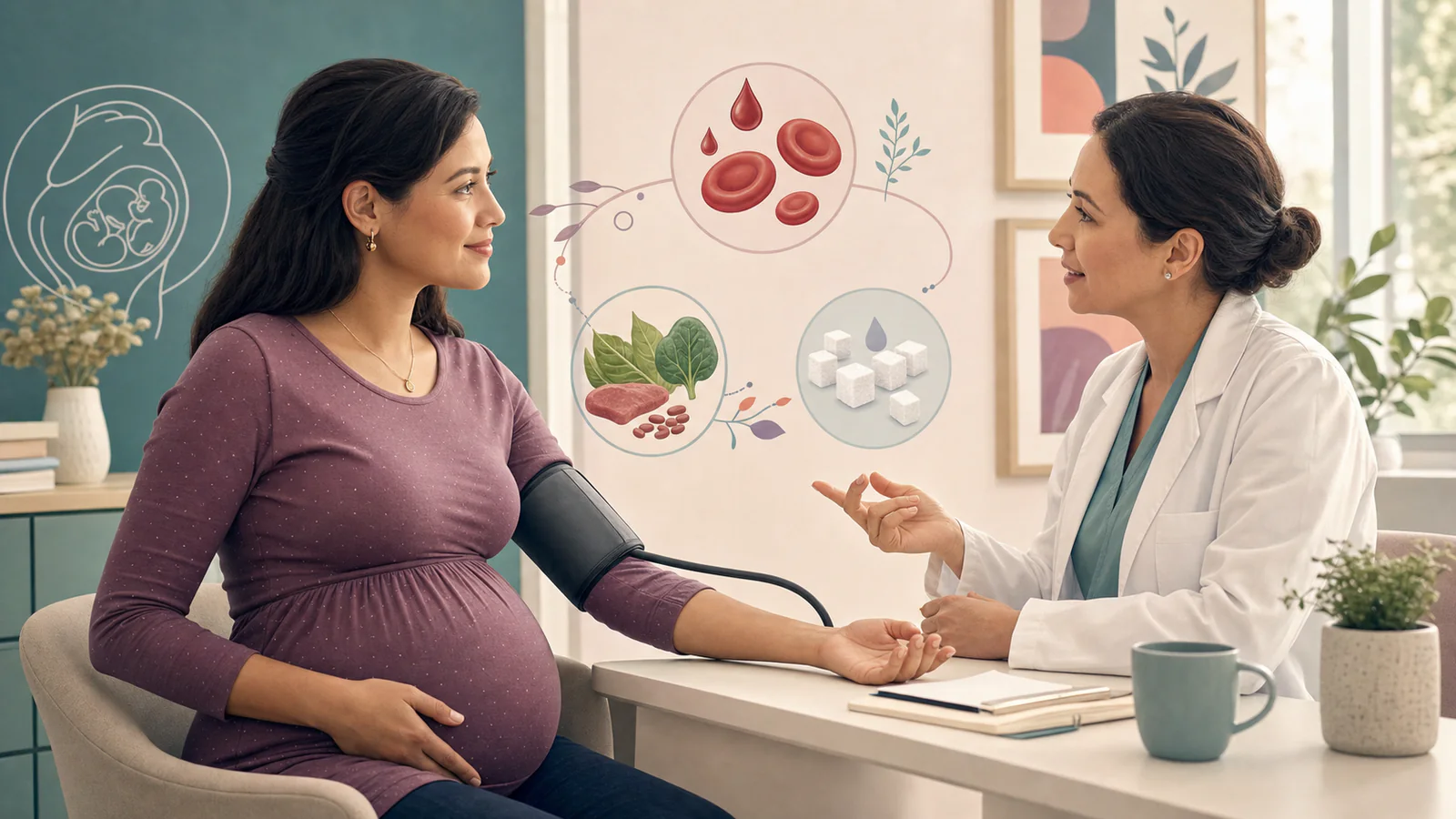
Twin pregnancies can carry higher risk than singleton pregnancies, which is one reason monitoring is often more structured. Checks such as blood pressure, urine tests and blood tests help care teams watch for issues like anemia, preeclampsia or gestational diabetes. Personal risk depends on clinical assessment.
NICE notes a higher incidence of anaemia in twin and triplet pregnancy and recommends additional blood count timing. NHS and ACOG describe higher-risk complications in multiple pregnancy, including pre-eclampsia and gestational diabetes.
These words can sound alarming. The purpose of naming them is not fear; it is to understand why blood pressure, urine checks, blood tests and symptom questions matter.
TwinPare takeaway
Risk awareness is useful when it leads to monitoring, questions and early contact with care — not when it becomes doom-scrolling.
Key points
- Twin pregnancies can carry higher risk than singleton pregnancies.
- NICE specifically flags higher anaemia incidence in twin and triplet pregnancy.
- Blood pressure, urine checks and blood tests help care teams watch for complications.
Questions to ask your care team
- How will you screen for anaemia in my pregnancy?
- What signs of preeclampsia should I know about?
- Will I be screened for gestational diabetes, and when?
Important caution
This item does not diagnose or estimate personal risk. Individual risk depends on medical history, symptoms, tests and clinical assessment.